Removing Scuff Marks from Walls: The Ultimate 2026 Guide to a Flawless Finish
You’re three days away from your final inspection in Melbourne, and the afternoon sun just hit the hallway, revealing a trail of dark furniture streaks and shoe scuffs you never noticed before. It’s a sinking feeling that many Victorian renters know well. You’ve spent years making this house a home, but now you’re worried those marks will cost you a portion of your bond or lead to a permanent patch of ruined paint. We understand that anxiety. It’s frustrating when a simple slip of a suitcase or a stray sneaker threatens your security deposit or the aesthetic of your living room.
The good news is that removing scuff marks from walls doesn’t have to be a gamble with your paintwork. Most marks are superficial and respond perfectly to the right technical approach. This guide provides the professional blueprint for erasing wall scuffs using methods that protect your finish and satisfy even the strictest property managers. We’ll explore the difference between fair wear and tear under current Victorian regulations, the safest DIY cleaning agents to use, and when it’s time to call in a local wall washing expert to guarantee a flawless result for your end of lease transition.
Key Takeaways
- Identify the specific type of wall mark to ensure you choose a cleaning method that won’t compromise your paint’s finish.
- Master the most effective techniques for removing scuff marks from walls using pH-neutral solutions and specialised microfibre cloths.
- Learn how to avoid the common “Magic Eraser trap” that can lead to permanent patches of dullness on matte or flat surfaces.
- Understand Victorian tenancy regulations regarding fair wear and tear to protect your bond during the final inspection.
- Discover when professional wall washing is the more efficient choice for restoring large areas to a flawless, move-out standard.
Understanding Your Walls: Paint Finishes and Scuff Types
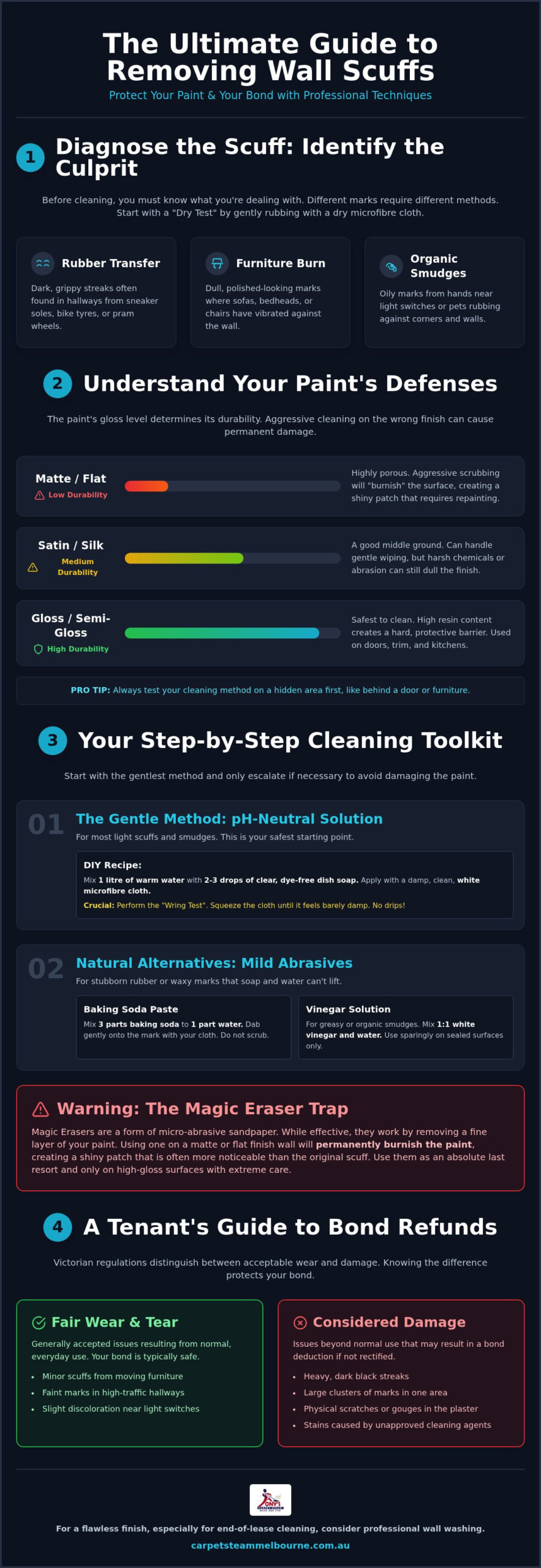
Diagnosis is the first step toward a flawless finish. Before you reach for a bucket of water, you need to identify what’s actually on your wall. Successful techniques for removing scuff marks from walls depend entirely on the balance between friction and chemistry. A black mark from a rubber sneaker is very different from a kitchen grease stain or a physical scratch in the plaster. If you treat them all the same, you risk turning a small blemish into a permanent eyesore. Start with a “Dry Test” by gently rubbing the mark with a clean, dry microfibre cloth. If the mark is just surface transfer, friction alone might lift it without any moisture or chemicals.
Common Scuff Culprits in Melbourne Homes
In our experience serving Melbourne households, scuffs usually fall into three categories. Identifying these early prevents you from using unnecessary force:
- Rubber Transfer: These are the dark, grippy streaks found in hallways. They usually come from bicycle tyres, sneaker soles, or pram wheels.
- Furniture Burn: This happens when sofas, bedheads, or dining chairs vibrate against the wall over time. It often leaves a dull, polished-looking mark.
- Organic Smudges: These are lower-level marks caused by pets rubbing against corners or oils from hands near light switches.
How Paint Gloss Levels Affect Cleaning
The success of your cleaning effort is often dictated by the paint’s resin content. Not all finishes can handle moisture or abrasion. Matte and flat paints are highly porous and lack a protective resin seal. If you scrub these aggressively, you’ll cause “burnishing,” which creates a permanent shiny spot that can’t be washed away. You’ll simply have to repaint the section.
Satin and silk finishes offer a middle ground of durability. They handle light wiping well but can still lose their lustre if you use harsh chemicals. Gloss and semi-gloss paints, typically used on doors, skirting boards, and in wet areas like kitchens, are the safest to clean. Their high resin content creates a hard barrier that allows you to use moisture and mild detergents with much less risk of surface damage.
For tenants, understanding these differences is vital for a successful end of lease cleaning. Victorian Consumer Affairs guidelines distinguish between “fair wear and tear” and actual damage. While minor scuffs from daily life are generally accepted, heavy black streaks or clusters of marks are often classified as damage. Mastering the art of removing scuff marks from walls safely ensures you meet the “reasonably clean” standard required to secure your bond refund without the need for expensive repainting. Always test your cleaning method on a hidden patch of wall behind a door first.
The Gentle Method: Removing Light Marks with Household Items
Most wall damage happens when people use too much force or too much liquid. If you’re focused on removing scuff marks from walls, start with the most conservative option. A pH-neutral dish liquid is your safest baseline. It breaks down surface oils without eating through the paint’s binder. Always use a white microfibre cloth. These cloths are engineered to trap particles rather than dragging them across the surface. This prevents microscopic scratches that eventually make paint look dull and aged.
The DIY Cleaning Solution Recipe
You don’t need expensive chemicals for light marks. Mix one litre of warm water with two or three drops of clear dish soap. Avoid soaps with heavy dyes or fragrances; these can leave a residue that attracts more dust later. Use the “Wring Test” before the cloth touches the plaster. Squeeze the cloth until it feels barely damp. If a single drop of water falls when you squeeze, it’s still too wet. Excess moisture can seep into the drywall core or cause the paint to bubble. Never use yellow or green kitchen sponges. The dyes in these sponges often bleed into white or light-coloured paint, creating a much bigger problem than a simple scuff.
Natural Alternatives: Baking Soda and Vinegar
For marks that resist soap and water, baking soda is a reliable mild abrasive. Create a paste using three parts baking soda to one part water. Apply a small amount to your cloth and dab it onto the mark. This paste is a gentle powerhouse for removing scuff marks from walls that have a waxy or rubberised texture. For organic smudges or kitchen-adjacent marks, a 1:1 dilution of white vinegar and water works well to cut through grease. Be careful with vinegar on unsealed or porous surfaces. The acidity can etch into the surface if it’s not a modern, sealed paint finish. Always perform a spot test in a hidden corner first.
Technique matters as much as the solution. Circular motions are the enemy of a streak-free wall. They create uneven friction and visible “halos” on the paint. Instead, use gentle vertical or horizontal strokes that follow the line of the wall. Once the mark is gone, use a second, dry microfibre cloth to buff the area immediately. This prevents “tide marks,” which are those unsightly water rings that appear as the edges of a wet patch dry slower than the centre. If you’re dealing with a whole room of marks, professional wall washing is often the more efficient path to a flawless finish.
Advanced DIY Techniques: Sugar Soap and Magic Erasers
When mild detergent fails, it’s time to move to professional-grade tools. You’ve likely seen Sugar Soap and Magic Erasers at local Melbourne retailers like Bunnings. These items are powerful, but they carry risks if you use them without a plan. While the previous section focused on gentle moisture, these advanced techniques rely on chemical breakdown and mechanical abrasion. Success in removing scuff marks from walls with these tools requires a disciplined approach to protect your paint’s integrity. You’re no longer just washing the surface; you’re actively managing the paint’s finish.
Many homeowners view Magic Erasers as a miracle sponge. In reality, they are made of melamine foam, which acts like extremely fine-grit sandpaper. They don’t just wash the mark; they sand it off. This is why they are so effective at removing scuff marks from walls, but it’s also why they can leave a dull, flat patch on a satin or semi-gloss finish. Use them sparingly. Similarly, Sugar Soap is the Australian industry standard for a reason. It’s an alkaline cleaner that cuts through the oily binders in grease and fingerprints. However, it’s a leave-no-trace chemical. If you don’t rinse it off with fresh water, it leaves a powdery residue that attracts dust and can even discolour your finish over time.
How to Safely Use a Magic Eraser
Melamine foam requires precision to avoid creating permanent “dull spots” on your plaster. Follow these steps for the safest results:
- Step 1: Dampen the foam and squeeze out all excess water until it’s barely moist.
- Step 2: Use the lightest possible pressure. Let the foam’s microscopic structure do the work rather than your muscle.
- Step 3: Monitor the “sheen” of the paint. Stop immediately if you notice the area becoming flatter or shinier than the surrounding wall.
Mastering Sugar Soap for Greasy Scuffs
Sugar Soap is essential for high-traffic areas like kitchens or hallways where scuffs are mixed with body oils. For spot cleaning, a dilution ratio of 1 part Sugar Soap to 10 parts water in a spray bottle is usually sufficient. If you’re washing a larger area, use a bucket and follow the “Bottom-Up” rule. Start cleaning at the skirting board and work your way up toward the ceiling. This prevents dirty water from running down into dry, porous paint, which creates permanent vertical streaks. Always finish by wiping the area with a clean, damp cloth to remove any remaining chemical residue.
The Tenant’s Guide: Dealing with Scuffs for a Bond Refund
Securing your bond in Victoria requires meeting the “reasonably clean” standard. While Victorian tenancy law protects you against fair wear and tear, heavy scuffing remains a grey area that often leads to heated disputes. As of June 2026, data shows that only 65% of Victorian bonds are returned in full. Wall condition is a primary factor in these deductions. Before you vacate, you must decide if removing scuff marks from walls yourself is feasible or if you need professional intervention to guarantee a pass. Transparency with your property manager is key. If a mark is deep or has damaged the plaster, it’s better to discuss a fix early rather than letting it become a surprise during the final inspection.
Melbourne Bond Cleaning Standards
Property managers focus heavily on high-traffic zones like entry hallways and kitchen corners. They look for surface consistency. If you’ve spot-cleaned a mark but left a shiny “halo” on a matte wall, they’ll likely flag it as damage. This is why thoroughness matters. Don’t just clean the scuff; blend the area into the rest of the surface using the light moisture techniques we discussed earlier. For a comprehensive look at what’s expected in the current market, check our guide to End of Lease Cleaning Melbourne. Always document your results with high-resolution photos. These serve as your primary evidence if a landlord claims the walls were left in poor condition.
Touch-up Paint: The Last Resort
Painting over a scuff is a risky move. Paint naturally fades and discolours due to UV exposure in Melbourne’s climate. Even if you have the original tin, the new patch will likely stand out. If you must paint, use the “Coin Sample” method. Scrape a tiny flake of paint from a hidden area, like inside a wardrobe, and take it to a paint specialist for a precise computerised match. Apply the paint using a feathering technique, lightly tapping the edges with a dry brush to blend it into the old finish. In most cases, professional wall washing is a much safer alternative. It removes the contaminant without adding new layers that might be rejected by a hawk-eyed inspector.
When to Call the Pros: Professional Wall Washing in Melbourne
DIY techniques are effective for isolated incidents, like a single hallway streak or a stray pencil mark. However, when scuff marks cover more than 20% of your wall surface, manual spot cleaning becomes a liability. You risk creating a “patchwork” effect where the cleaned areas look significantly brighter than the rest of the wall. Professional wall washing is designed to restore the entire vertical plane to a uniform, factory-fresh standard. It’s a comprehensive solution for large homes where hand-scrubbing every room is physically impossible and technically risky.
Professional intervention is also essential for complex restoration projects. For instance, the high standards maintained by Performance Painting in the field of property restoration demonstrate the precision needed to handle delicate surfaces. If you’re dealing with walls affected by smoke, flood residues, or years of accumulated grime in a rental property, simple soap and water won’t suffice. These situations require a deep understanding of chemical pH levels to lift contaminants without softening the paint binder. We often see homeowners try to tackle these heavy-duty jobs themselves, only to accidentally strip the pigment. By choosing a professional service, you eliminate the guesswork and ensure your home environment remains healthy and aesthetically flawless.
Many Melbourne residents find the greatest value in bundling their maintenance. Combining wall washing with our carpet steam cleaning or tile and grout services provides a total home refresh that is often required for high-stakes end-of-lease inspections. This integrated approach ensures that every surface meets the “reasonably clean” standard required by Victorian law, giving you total peace of mind during your move.
For readers who may be managing properties in other locations or are looking for high-end villa renovation inspiration, mkbstechnicalservice.com offers a comprehensive range of professional maintenance and restoration solutions.
Our technical approach relies on commercial-grade, non-toxic surfactants. These specialised solutions are engineered to emulsify oils and lift rubber transfer marks without the need for aggressive mechanical scrubbing. We utilise high-reach equipment to safely access double-storey voids and high ceilings, ensuring no corner is left untouched. Discover how we integrate wall care into our Professional Cleaning Services Melbourne to see the full scope of our specialized maintenance technology.
Why Best Carpet Steam Cleaning Melbourne?
We bring a no-nonsense, expert approach to every job. Based in Rockbank, we serve all Melbourne suburbs with a focus on efficiency and punctuality. Our team understands the local property market and exactly what property managers expect during a final walk-through. We offer rapid response times for those tight bond-back deadlines, ensuring your walls are restored quickly and safely. Don’t risk your security deposit on a DIY gamble. Get a Free Quote for Professional Wall Washing Today and let our specialists handle the hard work for you.
Secure Your Bond with Flawless Walls
You now have the professional blueprint for removing scuff marks from walls without compromising your paintwork. We’ve explored how to identify your specific finish, the safest way to use mild DIY solutions, and the technical risks of abrasive tools like melamine foam. Mastering these techniques is the best way to ensure your home meets the “reasonably clean” standard required in Victoria. It’s about protecting your security deposit while maintaining a healthy, vibrant living environment.
If the task feels overwhelming or your inspection date is looming, our team is ready to help. We provide specialised wall and floor restoration across all Melbourne suburbs. With 24/7 emergency restoration available and deep expertise in bond-back cleaning standards, we take the guesswork out of your end-of-lease transition. Trusting a local expert ensures the job is done right the first time, saving you from the stress of a failed inspection or permanent paint damage.
Take the final step toward a flawless move-out and enjoy the confidence that comes with a professionally restored home environment.
Frequently Asked Questions
Do magic erasers damage wall paint?
Magic erasers can damage wall paint because they function as a micro-abrasive, essentially acting like extremely fine sandpaper. While they are effective at removing scuff marks from walls, they often strip away the paint’s top layer or sheen. This results in a permanent dull patch on satin or semi-gloss finishes. We recommend using them only as a last resort and with the lightest possible pressure to avoid burnishing the surface.
Will sugar soap remove scuff marks from walls?
Sugar soap is highly effective at removing scuff marks from walls, particularly those caused by grease, body oils, or kitchen residues. As an alkaline cleaner, it chemically breaks down the binders in the stain. However, you must rinse the area with clean water afterward. Failing to do so leaves a chemical residue that attracts dust and may cause new paint to fail if you decide to touch up the area later.
How do I remove black scuff marks from white walls without painting?
Start by using a dry microfibre cloth to see if the black rubber or shoe mark lifts through friction alone. If it remains, apply a small amount of pH-neutral dish liquid mixed with warm water using a damp, white cloth. For stubborn streaks, a paste made of three parts baking soda to one part water provides a gentle abrasive action that lifts the pigment without the need for a fresh coat of paint.
Can I use nail polish remover to get scuffs off walls?
You shouldn’t use nail polish remover on painted walls. Most removers contain acetone, which is a powerful solvent designed to dissolve resins and pigments. Applying it to your wall will likely strip the paint down to the plaster or create a permanent, smeared mess. Stick to water-based cleaners or professional-grade surfactants to ensure you don’t turn a minor scuff into a major repair job that requires repainting.
What is the best way to clean matte paint walls?
Matte paint is highly porous and lacks the protective resin found in glossier finishes, making it a difficult surface to clean. The best approach is using a clean microfibre cloth dampened with plain water. Avoid aggressive scrubbing, as this causes burnishing, which creates a permanent shiny spot. If water isn’t enough, use a very diluted, clear dish soap and pat the area dry immediately to prevent water rings.
How much does professional wall washing cost in Melbourne?
Professional wall washing in Melbourne is typically calculated based on the number of walls or the total time required for restoration. Costs vary depending on the height of your ceilings, the type of paint finish, and the severity of the marks. Many local providers offer this as part of a comprehensive end-of-lease package. It’s best to request a tailored quote that considers the specific layout and condition of your Melbourne property.
Is wall scuffing considered fair wear and tear in Victoria?
Minor scuffing is generally considered fair wear and tear under Victorian Consumer Affairs guidelines. This includes small marks from daily life that occur over time. However, heavy black streaks or clusters of impact marks from furniture are often classified as tenant damage. Since only 65% of Victorian bonds were returned in full in mid-2026, addressing visible scuffs before your final inspection is a proactive way to protect your security deposit.
How do I remove scuffs from a rental property before moving out?
Follow a systemic approach starting with the gentlest method first. Use a dry microfibre cloth to lift surface transfer, followed by a damp cloth with mild detergent for organic smudges. If you’re dealing with high-traffic hallways, a diluted sugar soap solution is the professional standard for removing scuff marks from walls. Always work from the bottom up and dry the surface immediately to ensure the walls meet the strict standards required for a bond return.
