How to steam clean a couch with an iron safely
How to steam clean a couch with an iron: the safe method
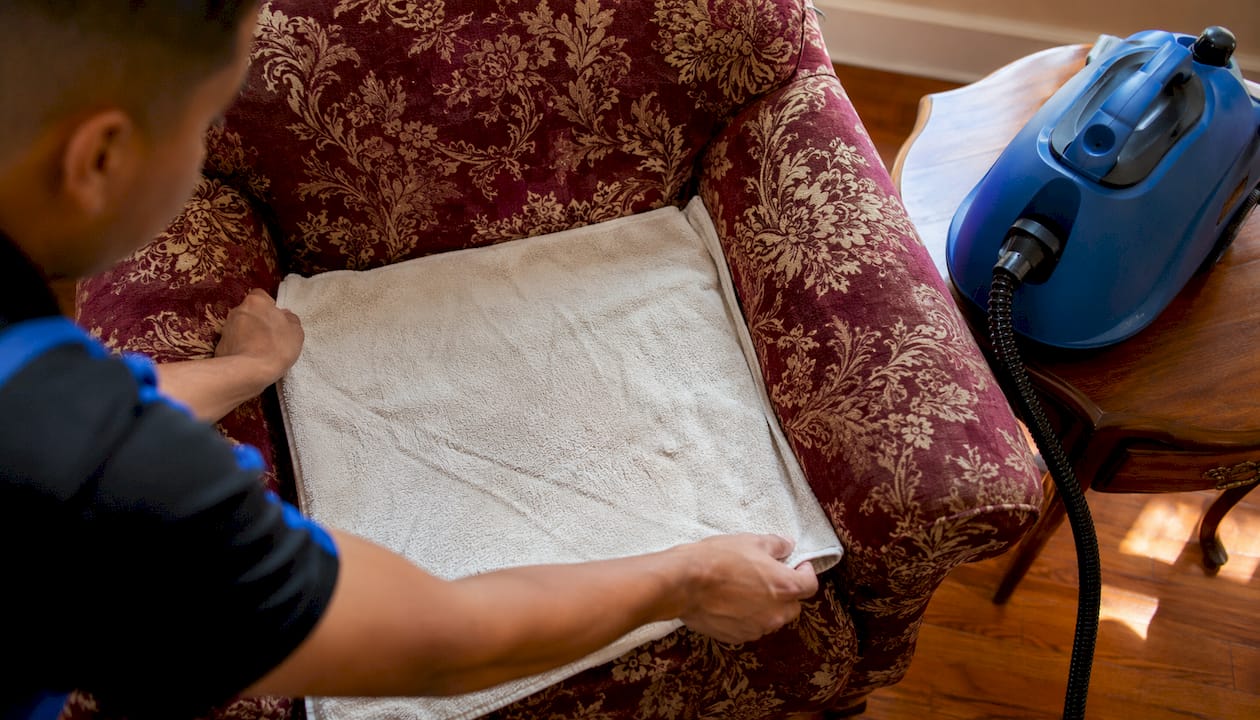
You can absolutely use a household iron to refresh upholstery, but the technique matters more than the tool. Done right, the steam penetrates fabric fibres, kills dust mites, and lifts odours without a drop of chemical. Done wrong, you end up with scorch marks or a cushion that smells like a wet dog for a week.
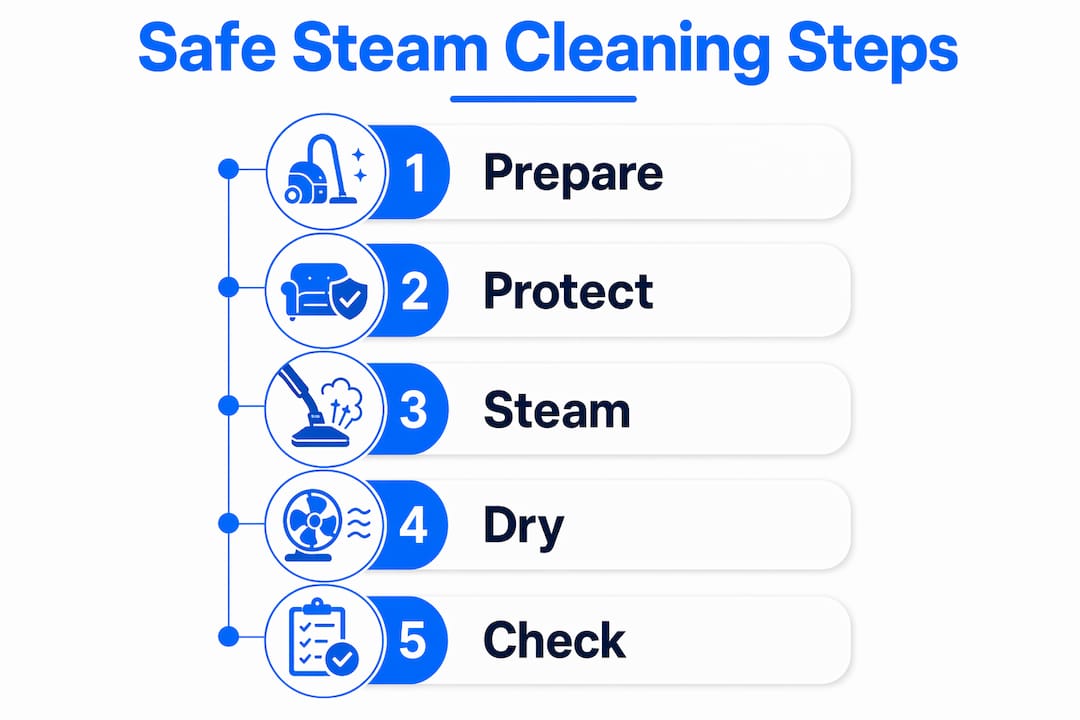
Here is what to do before you touch the iron to the couch:
- Vacuum thoroughly first. Target seams and crevices with the upholstery attachment to remove loose dirt that steam would otherwise push deeper into the fabric.
- Fill with distilled water only. Tap water leaves mineral deposits that clog vents and can spot your upholstery.
- Clean the iron itself. A dirty soleplate with starch or mineral residue will transfer grime directly onto the fabric.
- Test a hidden spot first to check for colour bleeding or shrinkage before committing to the full couch.
- Hold the iron a safe distance above the fabric, or lay a damp towel between the iron and the upholstery as a heat barrier.
- Steam each section for 2–3 seconds with slow, overlapping strokes. Never linger in one spot.
- Blot excess moisture immediately with a clean microfibre cloth after each section.
- Allow full airflow drying before anyone sits on the couch again.
Pro Tip: Sarah McAllister, founder of GoCleanCo, puts it plainly: “Start with the lowest effective heat and work your way up if needed. You can always add more heat, but you can’t undo scorch marks.” Begin on a low-to-medium steam setting, especially on synthetic or blended fabrics.
Table of Contents
- Step-by-step: steam cleaning your couch with an iron
- What can go wrong, and how to avoid it
- What a household iron can and cannot do for your couch
- When Melbourne residents should call a professional instead
- Rony’s Carpet Steam: professional upholstery cleaning for Melbourne
- Key takeaways
Step-by-step: steam cleaning your couch with an iron
- Vacuum the entire couch. Remove cushions and use the crevice tool along seams. A HEPA-filter vacuum captures allergens like pet dander that plain vacuuming misses.
- Prepare the iron. Fill with distilled water, set to medium steam, and let it heat fully. Check that the soleplate is clean and the steam vents are clear.
- Lay a damp towel over the section you are working on. This is your most important protection against direct heat contact.
- Hold the iron 6–8 inches above the towel and release steam in slow, side-to-side strokes. Move steadily; never press down.
- Work in small sections systematically, top to bottom, so you do not re-wet areas you have already dried.
- Blot each section immediately with a dry microfibre cloth to lift loosened dirt and control moisture.
- Open windows or run a fan. Proper post-steam drying typically takes several hours depending on ventilation and cushion density. Do not replace cushions until the fabric is completely dry.
“Avoid allowing standing water or condensed steam to stay on the surface for long by keeping steady motion. Steam should never be applied directly onto stitch lines, embellishments, or glued components, since heat and moisture can weaken them.” — Barbara Stern, textile expert at Ottoman Textiles
What can go wrong, and how to avoid it
Over-saturation is the biggest risk. Excess moisture trapped inside cushions creates the conditions for mould and mildew growth that is often impossible to remove without professional treatment. Keep steam bursts short and blot constantly.
Direct iron contact is the second hazard. Even a second of soleplate contact on delicate fabric can leave a permanent scorch mark. The damp towel barrier is non-negotiable on anything other than heavy-duty cotton or canvas.
Fabric type determines everything. Natural fibres like wool, linen, and silk can shrink or lose colour with too much heat or moisture. Synthetic fabrics like polyester and microfibre handle steam better, but still need the right settings. If the care label says “dry clean only,” put the iron away.
What a household iron can and cannot do for your couch
An iron is genuinely useful for a light refresh: it deodourises, kills surface dust mites, and smooths out minor creasing. For Melbourne households between professional cleans, it is a practical maintenance tool, and regular cleaning frequency matters for keeping upholstery in good condition.
What it cannot do: shift deep stains, reach soil embedded in the cushion core, or safely treat velvet, silk, or heavily textured weaves. The steam from a household iron also lacks the pressure and temperature consistency of a dedicated upholstery steam cleaner, so results on heavily soiled fabric will be limited.
When Melbourne residents should call a professional instead
Some situations genuinely call for trained hands. Delicate or antique upholstery, persistent stains that have set into the fibres, or any couch that has been over-saturated during a DIY attempt all need professional-grade equipment and expertise. The same applies to commercial settings: offices, aged care facilities, and hospitality venues in Melbourne face hygiene standards that a household iron simply cannot meet.
Professional carpet steam cleaning services use truck-mounted or high-pressure equipment that extracts moisture as it cleans, cutting drying time dramatically and eliminating the mould risk that haunts DIY attempts. For allergy sufferers, professional upholstery cleaning for dust mite removal goes far deeper than surface steaming.
Rony’s Carpet Steam: professional upholstery cleaning for Melbourne
When the iron is not enough, Rony’s Carpet Steam delivers the result your couch actually needs. Unlike DIY methods that risk over-saturation or fabric damage, Rony’s trained and insured technicians use modern equipment and eco-friendly, chemical-free methods to clean upholstery safely, whether it is a family sofa, a commercial fitout, or a sensitive aged care environment.
Same-day service is available across Melbourne, and every job comes with a satisfaction guarantee. From residential lounges to aged care carpet and upholstery cleaning, the team handles fabrics that DIY methods should never touch. Get in touch with Rony’s Carpet Steam today for a quote and give your upholstery the professional care it deserves.
Key takeaways
A household iron can safely refresh upholstery when used with distilled water, a damp towel barrier, and controlled 2–3 second steam bursts per section, but professional cleaning is the right call for deep stains, delicate fabrics, or commercial settings.
| Point | Details |
|---|---|
| Always test first | Check a hidden spot for colour bleeding or shrinkage before steaming the full couch. |
| Distilled water only | Tap water causes mineral deposits that clog vents and leave residue on upholstery. |
| Drying is critical | Allow 4–8 hours of airflow drying after steaming to prevent mould and mildew in cushions. |
| Iron has real limits | A household iron suits light refreshing only; deep stains and delicate fabrics need professional equipment. |
| Rony’s Carpet Steam | Melbourne’s professional option for eco-friendly, chemical-free upholstery cleaning with trained, insured staff. |
